

Hiring great talent is only the first step. But the real work lies in effective onboarding.
The challenge begins the moment the offer letter is signed.
According to SHRM, replacing an employee can cost 50% to 200% of their annual salary. One of the leading drivers of this early turnover is not a bad hire. It is a bad transition.
New hires join your team with high expectations. However, when the shift from recruitment to productivity is disorganized, that excitement fades.
Confusion sets in. Confidence drops. Within the first few months, some of your best talent will walk out the door.
Effective onboarding is more than an HR function.
It is a retention strategy. For many U.S. businesses, the gap between a new hire and a productive employee comes down to one thing: operational support.
What New Hire Integration Gaps Actually Look Like
These gaps are more common than most leaders realize.
New hires spend their first week chasing system access instead of learning.
However, training materials could be outdated or missing entirely. One employee might get a thorough introduction, while another gets 30 minutes and a stack of forms.
This inconsistency is one of the main reasons why employees and HR struggle to connect during the transition period.
New hires hesitate to ask questions. Managers assume orientation covers everything.
And the gap between what employees know and what leaders expect widens quietly.
Until it shows up in performance or resignation.
The cost is real.
Poor integration leads to slower productivity, lower engagement, and higher turnover.
For businesses in competitive hiring markets, those losses compound quickly.
What a Strong New Hire Program Actually Requires
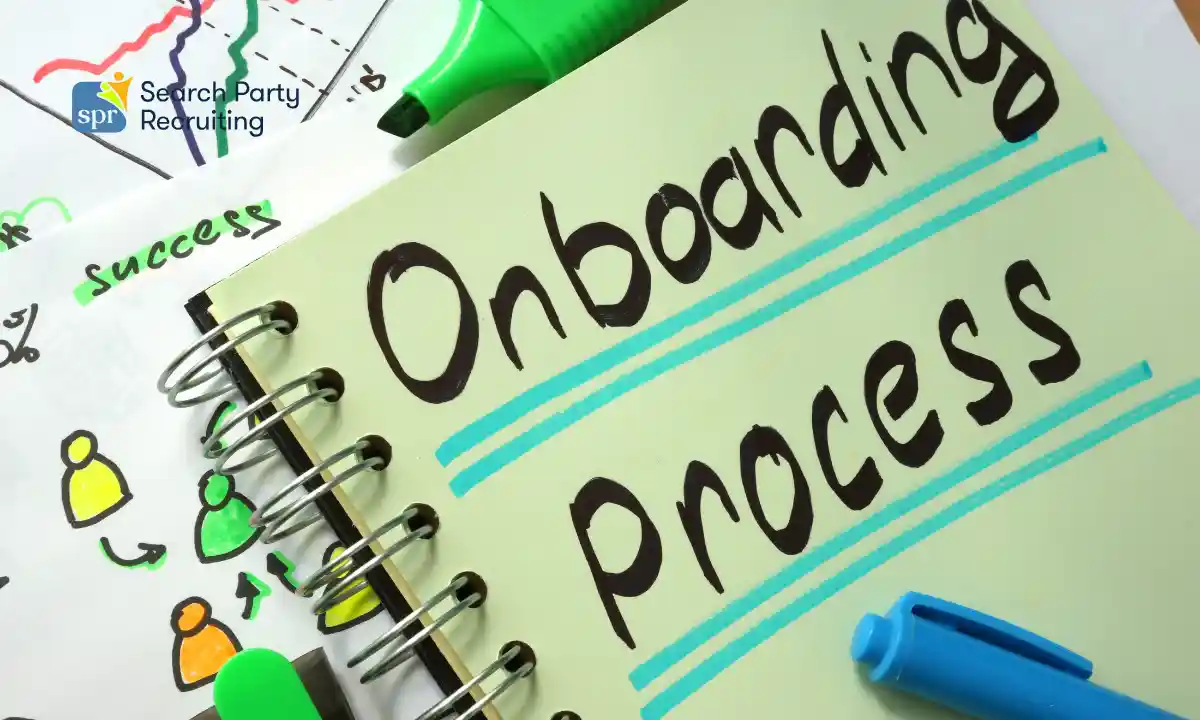
Companies that successfully bridge the gap between hiring and job-ready capability share a few common practices.
Document Everything Before Day One
Workflows, responsibilities, tools, and expectations should be clearly outlined before the new hire arrives.
Nothing should be left to verbal explanation or institutional memory.
Assign Clear Ownership
Someone must be responsible for guiding each new hire through their first 30, 60, and 90 days.
Check-ins are scheduled. Progress is tracked. Questions are answered before they become frustrations.
Maintain Consistency Across Every Hire
Every new hire should follow the same structured path, regardless of department, seniority, or hiring volume.
The new hire experience cannot depend on how busy the HR team happens to be that week.
Treat the Process as Ongoing
A strong onboarding program does not end after orientation. It continues through the employee’s first quarter.
Support gradually reduces as confidence and competence grow.
These practices work. But they require time, coordination, and consistent execution.
That is exactly where most HR teams hit their limit.
Why HR Teams Struggle to Execute Consistently
HR teams are already managing recruiting, employee relations, benefits, and compliance. New hire integration is just one more item on an already full plate.
During periods of rapid growth, the administrative load becomes unmanageable.
When HR is stretched thin, the structured new hire process is usually the first thing that suffers.
Training materials do not get updated. Check-ins get skipped. Documentation falls behind.
And new hires are left to figure things out on their own during the most critical weeks of their employment.
This is not a strategy problem. It is a capacity problem.
And capacity problems have a practical solution.
How a Talent Acquisition VA Closes the Gap
A talent acquisition virtual assistant gives your HR team the operational support it needs.
The onboarding program stays consistent and high-quality without adding to your full-time headcount.
What a Skilled VA Can Handle
A talent acquisition VA prepares and organizes new hire documentation before each start date.
Orientation sessions are scheduled and coordinated without consuming HR bandwidth.
Training materials are kept current and accessible. Employee records are updated accurately and on time.
Progress is tracked so nothing falls through the cracks.
The Result: A Smoother Transition Process
The entire new hire process runs smoothly, regardless of how busy your HR team is or how many people you are bringing on at once.
What Your HR Team Can Focus on Instead
When the administrative side of integration is handled consistently, HR professionals can focus on what matters most.
And that is, building relationships with new hires. Or identifying early warning signs of disengagement.
Even designing programs that genuinely improve retention.
The Bottom Line
A talent acquisition VA does not replace your HR team. It makes your HR team significantly more effective.
How Search Party Recruiting Helps U.S. Businesses Strengthen New Hire Success
Search Party Recruiting connects U.S. businesses with experienced virtual assistants.
These professionals specialize in talent acquisition and HR operations support.
Our candidates handle scheduling, documentation, training coordination, and new hire progress tracking.
The operational work gets done. Your onboarding program stays on track.
Additionally, many clients choose VAs based in the Philippines. Strong communication skills and deep HR experience make them excellent team additions.
Placements happen quickly. Most clients are matched within a few business days. Every hire comes backed by our 90-day guarantee.
If the match is not the right fit, we replace the candidate at no additional cost.
Strong Onboarding Build Stronger Teams

Hiring the right person matters. But helping that person succeed is what drives retention.
Companies that close their integration gaps reduce turnover, accelerate productivity, and build stronger teams over time.
The right operational support makes that possible without overloading your HR team.
Book a discovery call with Search Party Recruiting today, and get 50% off your first hire!
Or fill out our contact form, and we’ll get back to you in one business day.
Let’s talk about building the new hire to support your business needs to retain great talent.